Guides · · 9 min read
Are Trail Cameras Legal? Garden, Woodland and Privacy Explained
In your own garden a trail camera is usually fine, as long as it does not capture other people's land or people. In woodland and on someone else's land, things get much more complicated.
Are trail cameras legal? In general, yes: a trail camera is usually allowed if you use it on your own property and it only films your own land. Things get tricky as soon as the camera captures paths, roads, neighbouring properties or people: then data protection and privacy rights come into play. In woodland and on someone else’s land, you also always need the landowner’s permission and, where hunting takes place, that of the person who holds the hunting or shooting rights.
Important first: This is not legal advice. The legal position depends on the individual case and on local rules. This article gives you an overview so that you can ask the right questions and avoid common mistakes.
When is a trail camera allowed? The basic rule
Legally, a trail camera is a camera like any other. What matters is not the device but what it records and where it hangs. Three questions help you assess the situation:
- Who owns the place? On your own property, you decide. On someone else’s land you need permission.
- Who could walk into the picture? If the camera only films animals on your land, that is unproblematic. If walkers, neighbours or visitors could be captured, data protection becomes relevant.
- What happens to the recordings? Viewing recordings only for yourself is different from storing, sharing or publishing them.
Trail camera in your own garden
In your own garden, a wildlife camera is as a rule allowed. You can watch which animals dig up your lawn at night, whether a hedgehog lives under the hedge or which bird empties the bird feeder. You will find ideas on animals and locations in our guide wildlife camera for the garden.
Not onto the road, footpath or the neighbours’ property
The boundary is your property. Point the camera so that it captures no public areas such as the footpath or road and no neighbouring property. Even a camera that only seems to point at the neighbours’ property can lead to disputes, because your neighbour feels watched. In practice this means:
- Mount the camera fairly low and tilt it slightly towards the ground.
- Do not point it towards the neighbours’ fence, driveway or windows.
- After mounting, take a few test shots and check carefully what is in the picture.
- If in doubt, talk to your neighbours. A short conversation prevents a lot of trouble.
Family, guests and tradespeople
Even in your own garden, people walk into the picture: your family, guests, the delivery driver or tradespeople. Data protection law makes allowances for purely personal and household purposes. Even so, people who regularly come into your garden should know that a camera is there. Delete recordings of people that you do not need.
Allotments and community gardens
On an allotment, the rules of the association or the landlord also apply. Shared paths and neighbouring plots must not be in the picture. If in doubt, ask the committee before you put up a camera.
Trail camera in woodland: what is allowed?
The question “Is a trail camera allowed in the woods?” has no blanket answer. Two points are important.
Woodland always belongs to someone
Even if it is open to the public, every wood has an owner, for example a private individual, a local authority or the State. Hanging a camera on someone else’s tree without the owner’s consent is not allowed. Where hunting takes place, the person who holds the hunting or shooting rights is also involved. If you do not hold those rights yourself, agree with both parties, ideally in writing.
Walkers in the woods
Many woods are open to walkers, and access rules differ from one area and one landowner to the next. Walkers, joggers, mushroom pickers and cyclists may be out and about there quite legitimately. If a trail camera films a woodland path, it inevitably captures people who were never asked. Data protection authorities take a critical view of this.
In practice this means:
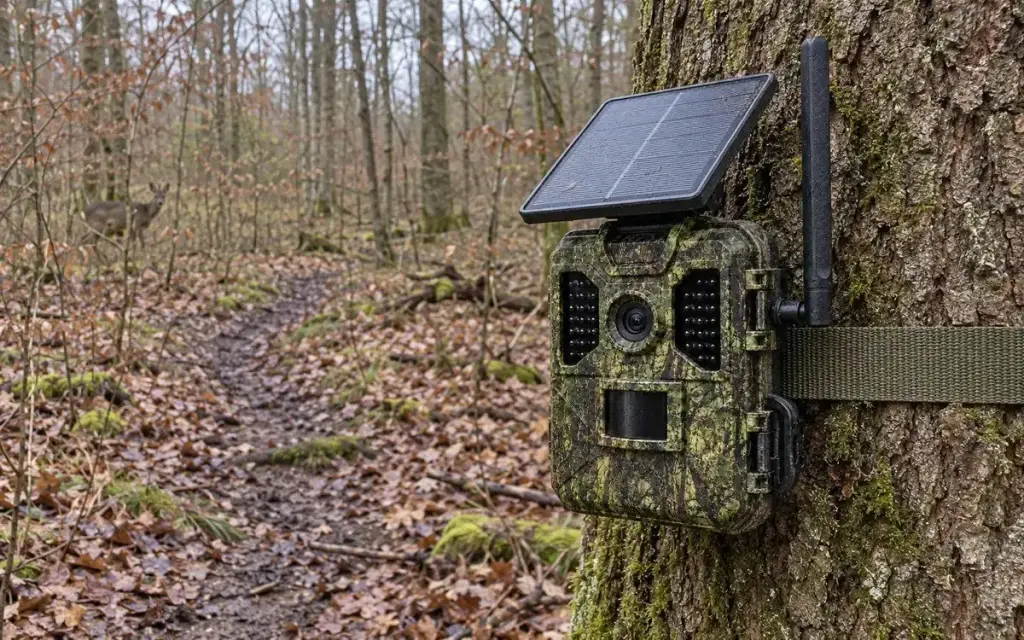
- Do not point the camera at paths, forest tracks or car parks, but at game trails, wallows or feeding spots away from them.
- Mount it low and angle it so that faces are as unlikely as possible to be recognisable.
- Delete recordings of people immediately.
- If you are unsure, ask the landowner or the holder of the hunting rights, and check with your national data protection authority (in Ireland, the Data Protection Commission).
Trail cameras and hunting
Hunters use trail cameras to monitor game populations, document damage caused by wildlife and identify game trails. Whether and how this is permitted on a given piece of land depends on hunting rules, data protection law and the agreement with the landowner. The same applies here: avoid capturing people wherever possible and agree the use with the landowner.
Trail cameras and data protection (GDPR)
The General Data Protection Regulation (GDPR) protects personal data. This includes pictures and videos in which people can be identified. There are exemptions for recordings made purely for personal or household purposes. However, that exemption ends when the camera captures public areas or other people’s property. The obligations of the GDPR then generally apply to private individuals as well.
Warning sign: when it makes sense
If your camera can capture people, the GDPR generally requires you to inform them. A clearly visible sign is the usual way. It should include at least:
- a clear notice of the video recording (for example a camera symbol),
- who is responsible, with contact details,
- the purpose of the recordings,
- where further information can be found.
A sign does not make an impermissible camera permissible, though. It replaces neither the owner’s permission nor careful positioning.
Storing, sharing, publishing
Keep recordings of people only as long as you really need them. Do not publish pictures of identifiable people without their consent, for example on social media or in group chats. Animal pictures, on the other hand, you are welcome to share: just make sure no person, no number plate and no neighbour’s house can be seen in the background.
Sound recordings and privacy
Many trail cameras record video with sound. The criminal law protects privacy and private conversations. If people could be within earshot, it is better to switch off sound recording. The protection of people’s most private spaces is even stricter: recording images inside homes or other especially protected areas can be a criminal offence. A trail camera therefore never belongs in front of other people’s windows, patios or changing rooms.
Using a trail camera as a security camera
A 4G trail camera works without a mains supply and without WiFi. That is why many people also use it as a security camera for a holiday property, a garden shed, a farmyard or a log store. This is possible on your own land, provided the camera only captures that land.
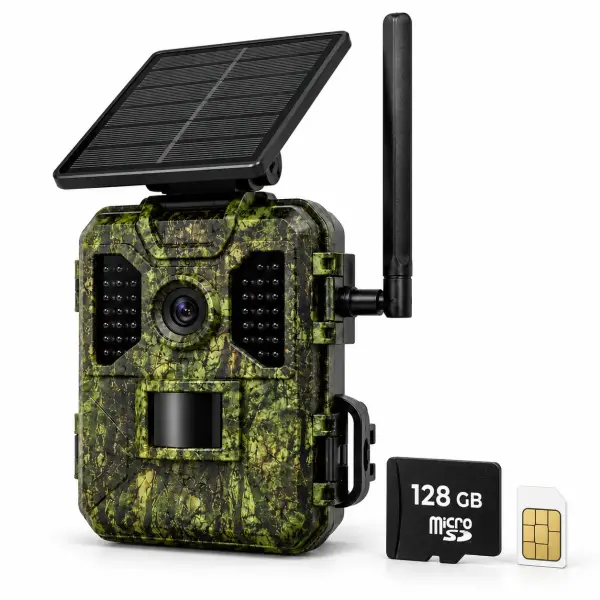
The 4G Trail Camera 4K with Solar Panel sends an instant notification via the app when it detects movement and offers live view on your smartphone. A SIM card and a 128 GB memory card are included. If you have to expect people nearby, the same rules as above apply: respect property boundaries, put up a sign and delete recordings of people promptly. How 4G differs from WiFi models is explained in WiFi or 4G trail camera.
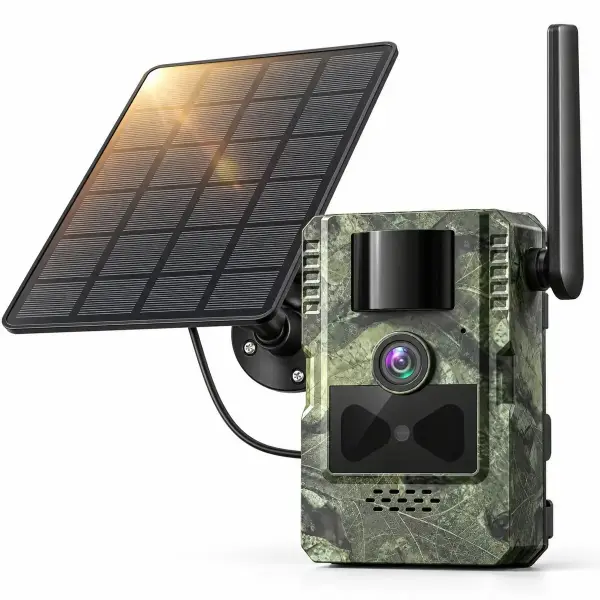
The 4G Solar Trail Camera 2.7K with Two-Way Audio also lets you listen and speak through the app. Use this feature responsibly and never to listen in on other people’s conversations.
Overview: what is allowed where?
| Situation | As a rule | What to watch out for |
|---|---|---|
| Own garden, only your own land in the picture | Allowed | No road, footpath or neighbouring property in the picture |
| Own garden, footpath or neighbour in the picture | Problematic | Reposition the camera or narrow the field of view |
| Allotment | Usually possible | Follow the association’s rules, do not film shared areas |
| Your own woodland | Possible | Do not film paths, bear in mind that walkers may be present |
| Someone else’s woodland or field | Only with permission | Consent of the owner and, where relevant, of the holder of the hunting rights |
| Recordings of identifiable people | Relevant for data protection | Inform people, put up a sign, keep recordings briefly, do not publish |
Five tips for using your trail camera lawfully
- Clarify permission: Only hang the camera where you are allowed to film. On someone else’s land, ask first.
- Check the field of view: After mounting, do a walk test and look closely at the first pictures. Our guide trail camera settings explained shows you how.
- Lower rather than higher: A camera mounted low and tilted slightly downwards captures wildlife well and faces less often.
- Store sparingly: Delete recordings of people and empty the memory card regularly.
- Secure it properly: A stolen camera is an additional data problem. You will find mounting tips in how to mount a trail camera and protect it from theft. With the cable lock for trail cameras you secure the camera to a tree or post.
Which trail camera suits which use?
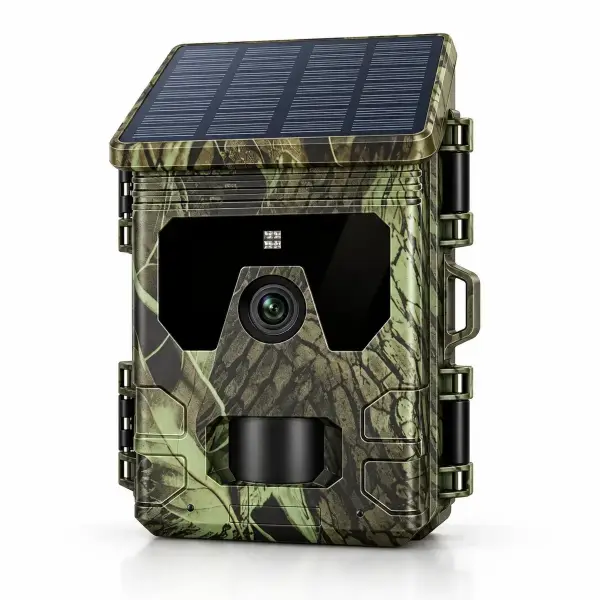
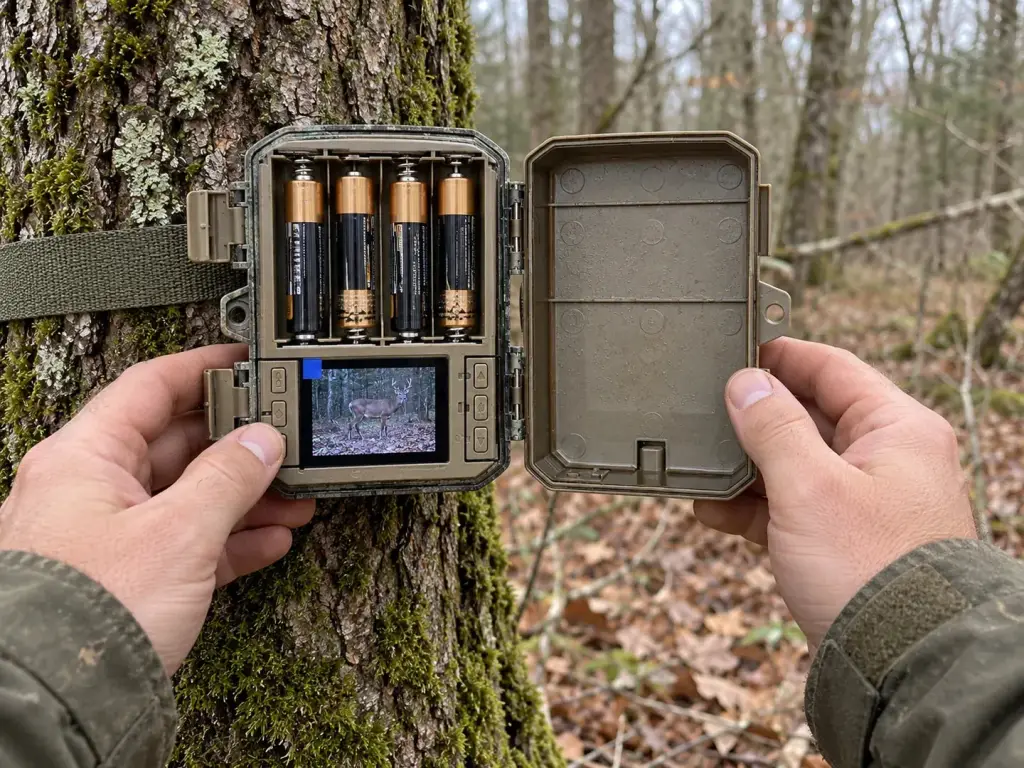
For simply watching animals in the garden you do not need any data transfer. The Solar Trail Camera with Display records to a microSD card, and you view the pictures directly on its 2.0-inch colour screen. No app, no SIM, no subscription, and no pictures sent over the mobile network. For remote properties you want to keep an eye on from a distance, a 4G camera is the more practical solution. You will find all models in our trail cameras overview.
If you mainly want to watch animals in your own garden, the Solar Trail Camera with Display is a good start: it works without a network and without an app, and all recordings stay with you on the memory card. Questions about the right model? Our customer service is there for you Monday to Friday, 9 am to 6 pm: contact us.
Frequently asked questions
Can I put up a trail camera in my garden?
As a rule yes, as long as the camera only captures your own property. The road, footpath and neighbouring properties should not be in the picture. This is not legal advice; in an individual case the assessment may differ.
Is a trail camera allowed in the woods?
Only with the consent of the landowner and, where hunting takes place, of the holder of the hunting rights. As walkers may be in the woods, the camera should not film paths. Access and hunting rules vary, so check locally.
Do I need a sign for my trail camera?
If the camera can capture people, the GDPR generally requires you to inform them, usually with a sign. A sign does not make an impermissible camera permissible, though.
Can I post trail camera pictures online?
Animal pictures, yes. You should not publish pictures in which people can be identified without their consent. Also look out for number plates or neighbouring houses in the background.
Can I use a trail camera as a security camera?
On your own property this is possible, provided only that property is captured. A 4G trail camera needs neither a mains supply nor WiFi and sends a notification to your smartphone when it detects movement. Data protection rules apply to any people in the picture.
Should I switch off sound recording?
If people could be within earshot, yes. The criminal law protects privacy and private conversations. Sound is rarely needed for simply watching wildlife.