Guides · · 8 min read
Wildlife Camera for the Garden: Watching Hedgehogs, Foxes and Birds
Who visits your garden at night? With a wildlife camera you can see hedgehogs, foxes, martens or badgers. Here is how to choose the camera and the spot, and keep the neighbours and the road out of the picture.
A wildlife camera for the garden shows you who is out and about at night: hedgehogs, foxes, martens, badgers and, during the day, plenty of birds. Mount the camera at about knee height on an animal track, a gap in the fence or a feeding spot, and point it at your own garden, not at the road or the neighbours’ property. For small animals, set a high motion sensitivity. Here we explain step by step how to choose the camera, the spot and the settings.
Which animals you can watch with a garden wildlife camera
Many garden owners are amazed at how much goes on at night. Signs such as a dug-up lawn, nibbled fruit or droppings on the patio often reveal that someone has been there. A garden nature camera shows you who it was.
| Animal | Active | Typical signs | Camera tip |
|---|---|---|---|
| Hedgehog | Dusk and night, hibernates in winter | Small sausage-shaped droppings, snuffling noises under hedges | Mount very low, high sensitivity |
| Fox | Mainly dusk and night, in towns also during the day | Gaps in fences, digging marks, droppings on raised spots | Point at fence gaps or paths |
| Marten | Night | Noises in the roof space, tracks around the carport and garage | Point at the entrances to sheds or the carport on your own property |
| Badger | Night | Funnel-shaped holes in the lawn from searching for worms and grubs | Point at the lawn, medium height |
| Birds | Day | Bird feeder, bird bath, nest box | Point at the feeder or bird bath from a distance |
Depending on where you live, other visitors may turn up: neighbourhood cats, squirrels and, in gardens on the edge of woodland, deer.
Which camera is best for the garden?
A wildlife camera for the garden above all has to do three things well: record cleanly at night, reliably detect small animals and run for a long time without maintenance. Look out for these points:
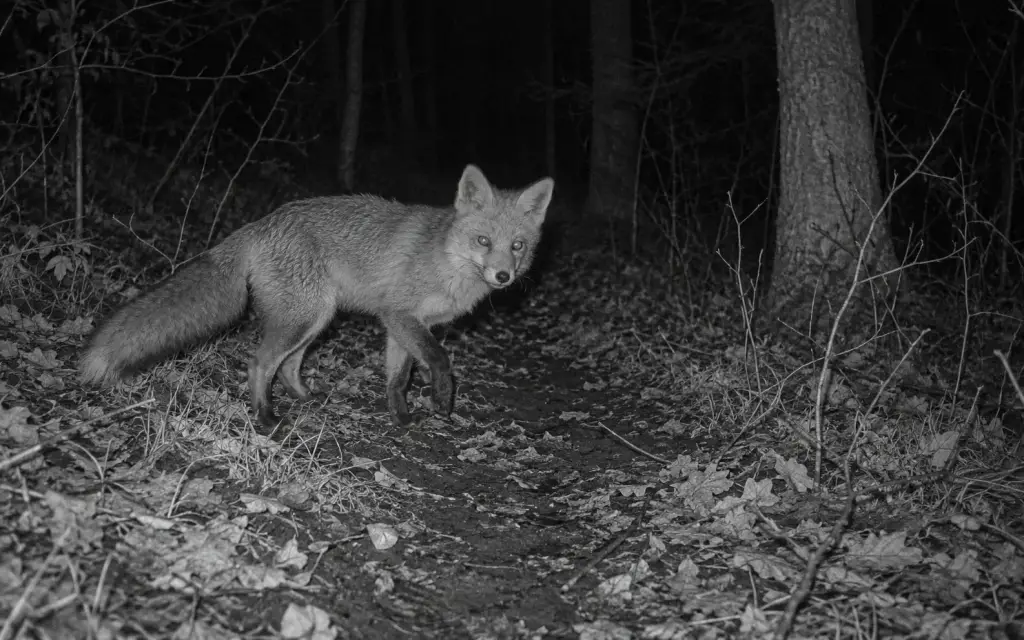
- Night vision with infrared: Most garden animals are active at night. A night vision animal camera works with infrared LEDs and delivers black-and-white pictures without a visible flash. With 940 nm infrared (no glow), no glow is visible to the human eye.
- Fast trigger: Hedgehogs and martens are quickly out of the frame. A short trigger time increases the chance of a complete picture.
- Wide angle of view: A 120° wide angle covers a larger area of the garden.
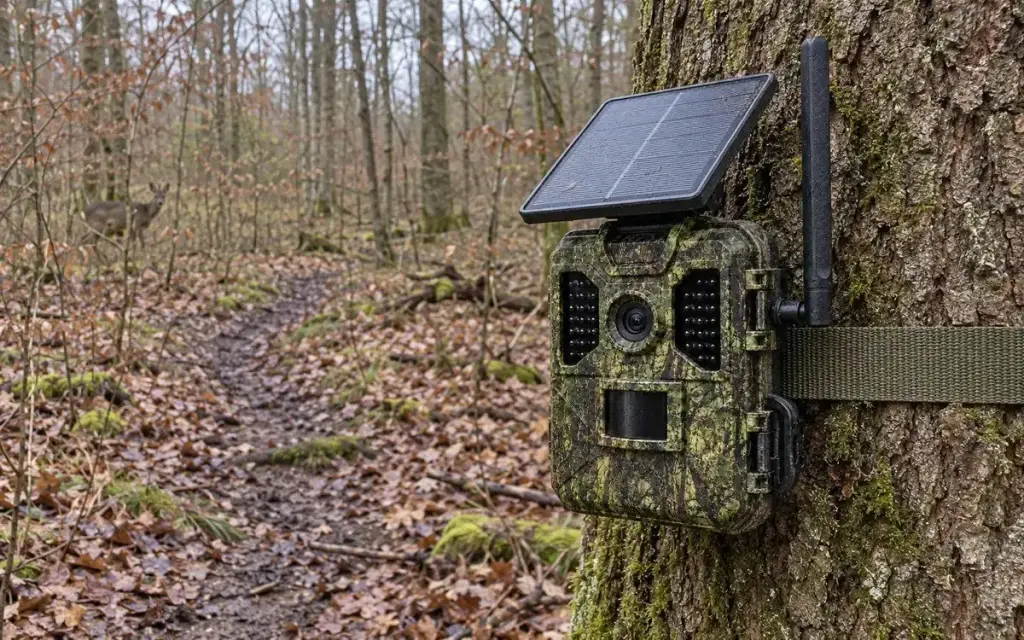
- Power supply: With a solar panel and battery, you need to go to the camera less often.
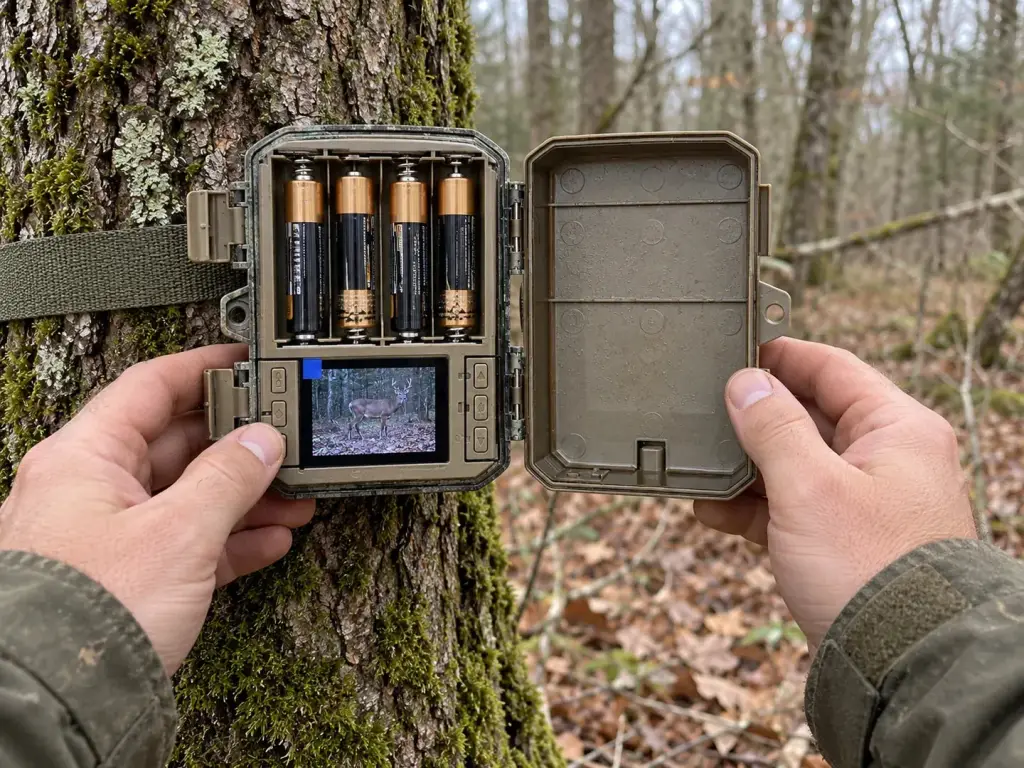
- Viewing pictures: either directly at the camera on a display or via 4G on your smartphone. Why a WiFi wildlife camera often does not live up to its name is explained in our guide WiFi or 4G trail camera.
Our garden wildlife cameras compared
| Model | Viewing pictures | Power | Especially good for the garden |
|---|---|---|---|
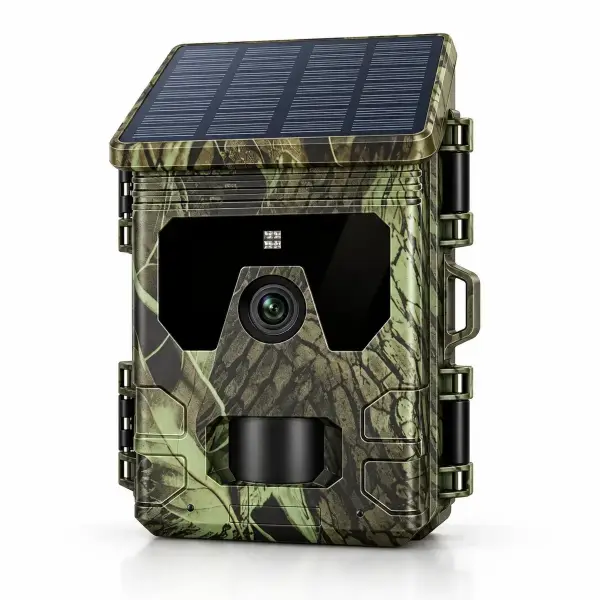
| Solar Trail Camera with Display | 2.0-inch display, microSD card, no subscription | Built-in solar panel and lithium battery | 120° wide angle, 36 invisible IR LEDs, 0.2 s trigger time |
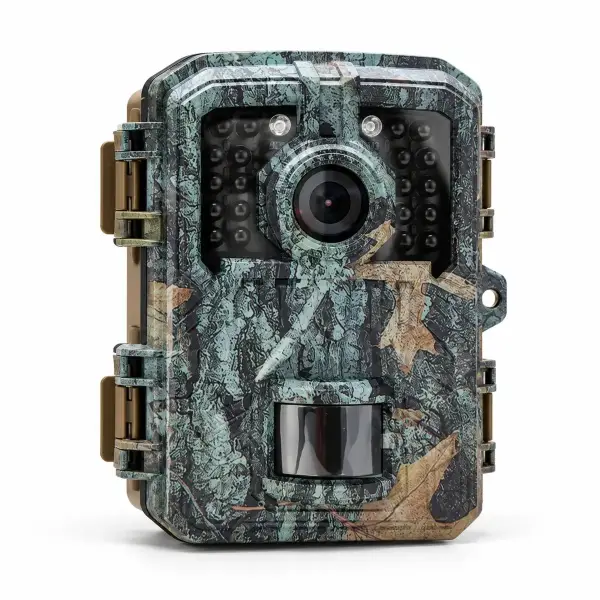
| Mini Trail Camera Full HD | 2.0-inch display, microSD card | 4 AA batteries, up to 6 months standby | Small and light, night vision up to 15 m |
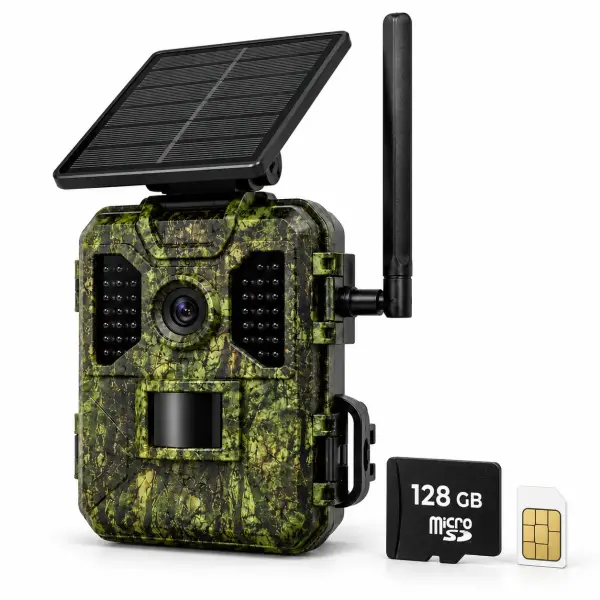
| 4G Trail Camera 4K with Solar Panel | App with live view and motion alerts | 7,800 mAh battery and 4 W solar panel | 4K recordings, 940 nm infrared, SIM and 128 GB card included |
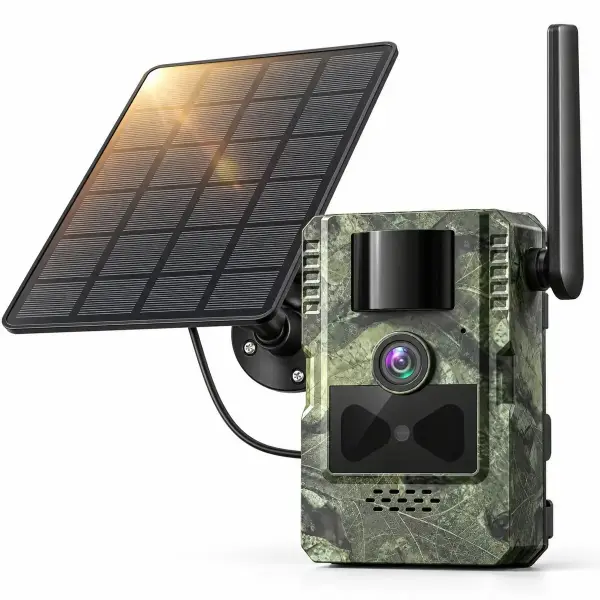
| 4G Solar Trail Camera 2.7K | App via 4G | 7,800 mAh battery and detachable 4 W solar panel | Two-way audio, 2.7K video with sound, 120° detection |
If you only want to look through the animals now and then, a model with a display will serve you well. If you want to see right away who is at the feeding spot, choose a 4G camera.
Placing your wildlife camera in the garden
The location decides more about good pictures than the technology. First watch for a few days to see where animals pass. Typical spots in the garden are:
- gaps in a fence or hedge
- paths along hedges, walls and flower beds
- compost heaps and leaf piles
- the edge of a pond and the bird bath
- feeding spots
A few basic rules apply when mounting:
- Height: For hedgehogs, foxes and martens about knee height, and even lower for hedgehogs. If the camera hangs too high, small animals pass underneath the detection zone.
- Distance: As a guide, 2 to 5 metres from the track. Trail cameras are usually not built for close-ups. Animals that are very close come out blurred or, at night, overexposed.
- Direction: Not into the morning or evening sun. Backlight and warm surfaces cause false triggers.
- Clear field of view: Cut back branches and tall grass in the picture. Moving plants trigger the camera.
- Side-on view: Point the camera diagonally at the track. The sensor detects animals walking across the picture better.
You can read more about height, angle and fixing in our guide how to mount a trail camera. In front gardens and allotments that are easy to see from outside, a cable lock for trail cameras protects against opportunistic theft.
Wildlife camera at the bird feeder
Birds are active by day, small and fast. To get good pictures from a camera at the bird feeder, keep the following in mind:
- Keep some distance from the feeder. At very close range the picture is often blurred.
- Choose a high sensitivity, because birds are small.
- Use burst mode or short videos. A single picture easily misses the moment.
- Set a short interval, as there is a lot going on at the feeder. Expect lots of recordings and check the memory card regularly.
Watching hedgehogs
Hedgehogs move very close to the ground. So hang the camera low and angle it slightly downwards. Good spots are hedges, leaf piles and a hedgehog house. Do not point the camera directly at the entrance, though, but at the path in front of it, so that you do not disturb the animals. If you offer water, use a shallow dish of water and not milk, because hedgehogs cannot tolerate milk.
Garden wildlife watching through the year
What your camera shows depends heavily on the season. So do not plan the location and settings once and for all; adapt them.
- Spring: Hedgehogs wake from hibernation and are looking for food. Birds build nests. A good time to reposition the camera.
- Summer: Nights are short and many animals only come out late. Tall grass and dense shrubs quickly grow into the picture, so check the field of view regularly. On hot days the motion sensor detects animals less well; a higher sensitivity can help.
- Autumn: Hedgehogs build up reserves for winter and are often very active. Leaf piles become popular hiding places.
- Winter: Hedgehogs hibernate; foxes and martens stay active. In snow you will see tracks that point you to new locations. Cold puts a strain on batteries, and short days give the solar panel less sun.
Make a note of when which animals come. After a year you will know your garden much better and know exactly where the camera gets the best results.
Respecting neighbours and passers-by
You are not alone in your garden. A wildlife camera is meant to show animals, not people. Stick to these rules:
- Only point the camera at your own property.
- Keep the road, footpath, the neighbours’ garden and other people’s windows out of the picture.
- After mounting, check the field of view and correct the angle if anything that is not yours is in shot.
- Delete recordings that accidentally show people, and do not pass them on.
- Tell family and guests that a camera is up. A small sign makes things clear.
- Be cautious with sound recording. Recording other people’s conversations is particularly sensitive legally.
If you only film animals on your own property, you are generally on the safe side. As soon as public areas or neighbours are captured, privacy rights and data protection may be affected. This is not legal advice. Our guide Are trail cameras legal? gives an overview.
Watching animals without disturbing them
- Use infrared rather than visible light.
- Go to the camera during the day to change the card or batteries.
- Do not place the camera right next to nests, setts, dens or roosting spots.
- Do not deliberately feed foxes or martens.
The right settings for the garden
These starting values have proven themselves for garden animals:
- Sensitivity: high, because of the small animals. If you get lots of empty pictures, go down one level.
- Mode: photo and a short video of 10 to 20 seconds, so you also see behaviour.
- Interval: short, about 10 to 30 seconds.
- Time window: if your camera offers it, only record at night. That saves hundreds of pictures of the lawnmower and gardening.
All settings in detail and the walk test can be found in our guide trail camera settings explained.
Our recommendation for the garden
For most gardens the Solar Trail Camera with Display is the right fit: the solar panel and battery are built in, you view the pictures directly on the 2.0-inch display, and you need neither an app nor a subscription. If you would rather see your night-time visitors on your smartphone right away, you will find all 4G models in our overview of trail cameras. You have a 30-day right of return with free returns and a 3-year warranty.
Frequently asked questions
How high should a wildlife camera hang in the garden?
For hedgehogs, foxes and martens about knee height, and even lower for hedgehogs. If the camera hangs too high, small animals pass underneath the detection zone.
Can I film the neighbours’ property with a garden wildlife camera?
No. Only point the camera at your own property and keep the neighbours’ garden, the road and the footpath out of the picture. This is not legal advice.
Which camera is best for filming animals in the garden at night?
A wildlife camera with infrared night vision and a motion sensor. It records in black and white at night, without a visible flash. With 940 nm infrared (no glow), no glow is visible to people.
Can I use a wildlife camera at a bird feeder?
Yes. Keep some distance from the feeder so the picture stays sharp, set a high sensitivity and use burst mode or short videos.
Why does my garden wildlife camera only record empty pictures?
Common causes are moving branches or grass in the picture, direct sun on the camera or too high a sensitivity. Clear the field of view, change the direction and lower the sensitivity by one level.
Do I need a subscription for a garden camera?
No, not necessarily. Models with a display and a microSD card, such as our Solar Trail Camera with Display, work entirely without an app or subscription. You only need a SIM card with mobile data if you want to receive pictures on your smartphone via 4G.