Guides · · 8 min read
Trail Camera Buying Guide: What to Look For Before You Buy
Which trail camera suits you? The key buying criteria clearly explained, from 4G and night vision to battery and warranty, and which model is right for which purpose.
Before you buy a trail camera, there is one question to settle first: do you want to see the pictures on your smartphone straight away, or is it enough to read the memory card on site? After that, trigger time, night vision, power supply and weather protection decide. There is no single best trail camera; there is only the camera that suits your location and your goal.
This trail camera buying guide explains the key criteria step by step. At the end you will find an overview of which WildenoCam model suits which purpose. You will deliberately not find an invented test winner or a ranking here.
Buying a trail camera: first decide what it is for
Before you buy, think briefly about what you need the camera for. The answers to these questions already narrow the choice considerably:
- Where will the camera hang: in your own garden, at the edge of a wood, on hunting ground or at a holiday home?
- Is there mobile signal there?
- How often will you get to the camera to check the battery or memory card?
- Do you mainly want photos, videos or both?
- Do you want to be notified immediately when something moves?
Someone who wants to watch hedgehogs and foxes in their own garden, for example, has different requirements from a hunter who wants to keep an eye on a distant high seat.
The key buying criteria at a glance
1. Transfer: classic, 4G or WiFi
This is where the models differ most.
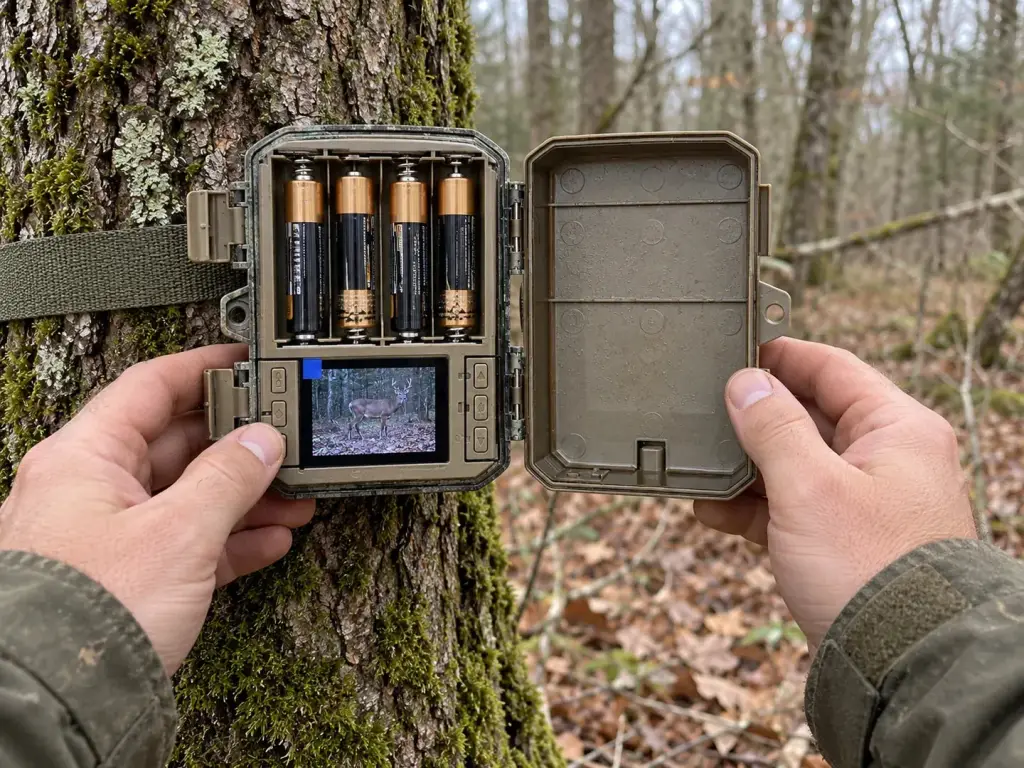
- Classic trail camera: It saves all recordings to the microSD card. You view the pictures on the camera’s display or later on a computer. There is no app, no SIM card and no ongoing cost. Ideal for places without mobile signal.
- 4G trail camera: It sends recordings straight to your smartphone over the mobile network. For this you need 4G coverage at the location, a SIM card and a data allowance. You do not have to walk to the camera to see what has happened.
- WiFi trail camera: Many of these models only create a local network. You can then download the pictures with your smartphone from a few metres away. In most cases this is not true remote transfer.
We explain the difference in detail in our guide WiFi or 4G trail camera.
2. Resolution: look for the real figure
For video, Full HD (1080p), 2.7K and 4K are common. Full HD is perfectly adequate for many garden observations. 2.7K and 4K show more detail, for example if you want to recognise animals at a greater distance. But higher resolution also means larger files and more data used for transfer.
With photos it pays to look closely: some figures are interpolated, in other words scaled up. More megapixels then do not automatically mean more detail. The native resolution of the sensor is more meaningful. Reputable sellers state both values separately.
3. Trigger time and detection zone
The trigger time is the time between the movement and the recording. The shorter it is, the less often you see only a rear end or an empty path. Values around 0.2 seconds are fast; 0.5 seconds is enough for many garden observations.
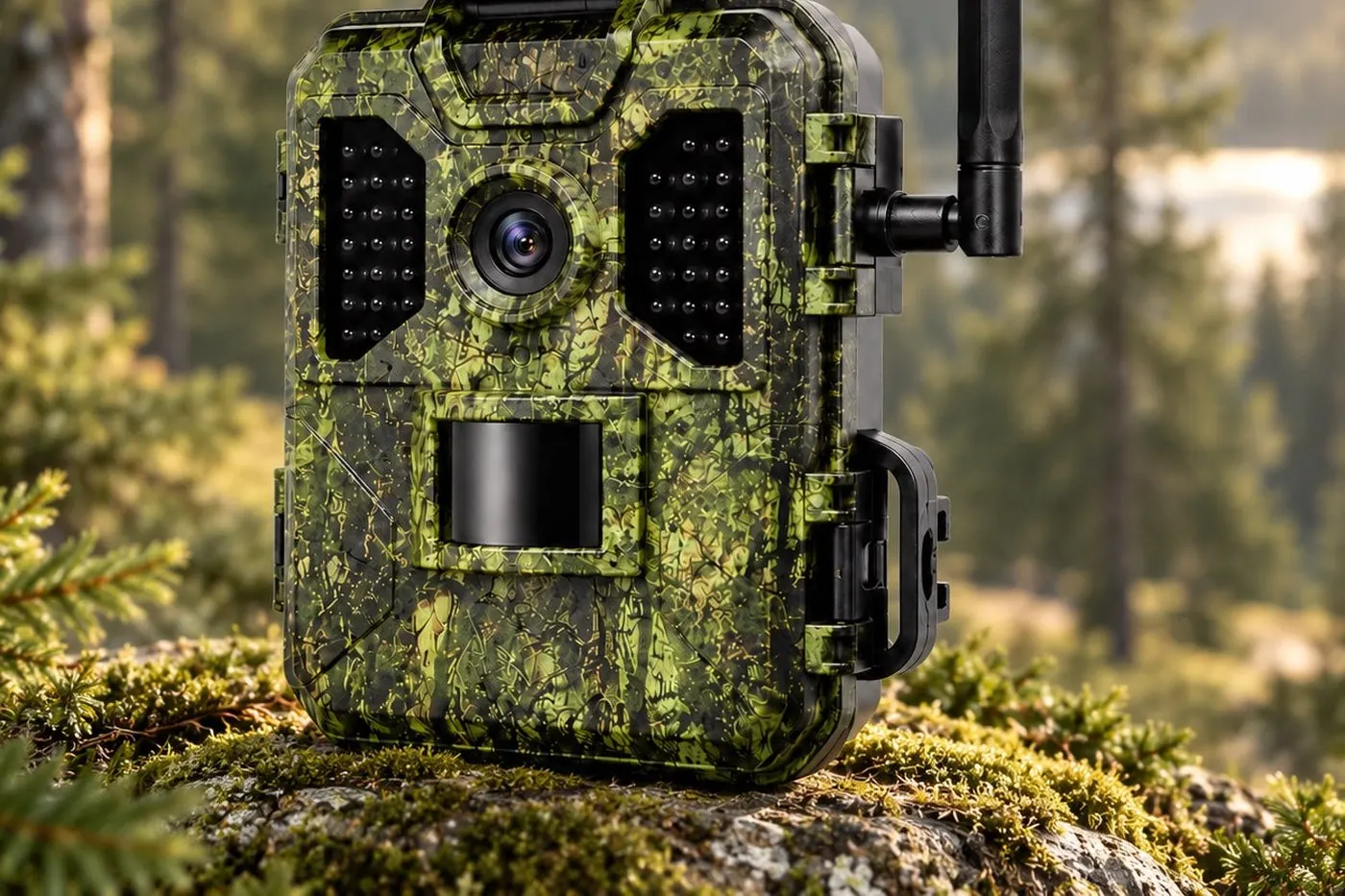
Almost all trail cameras detect movement with a PIR sensor, which reacts to moving heat. Two values matter:
- Range: Up to what distance is movement detected?
- Detection angle: How wide is the monitored area? A wide angle covers more; a narrower angle is well suited to a narrow game trail.
4. Night vision: 850 nm or 940 nm
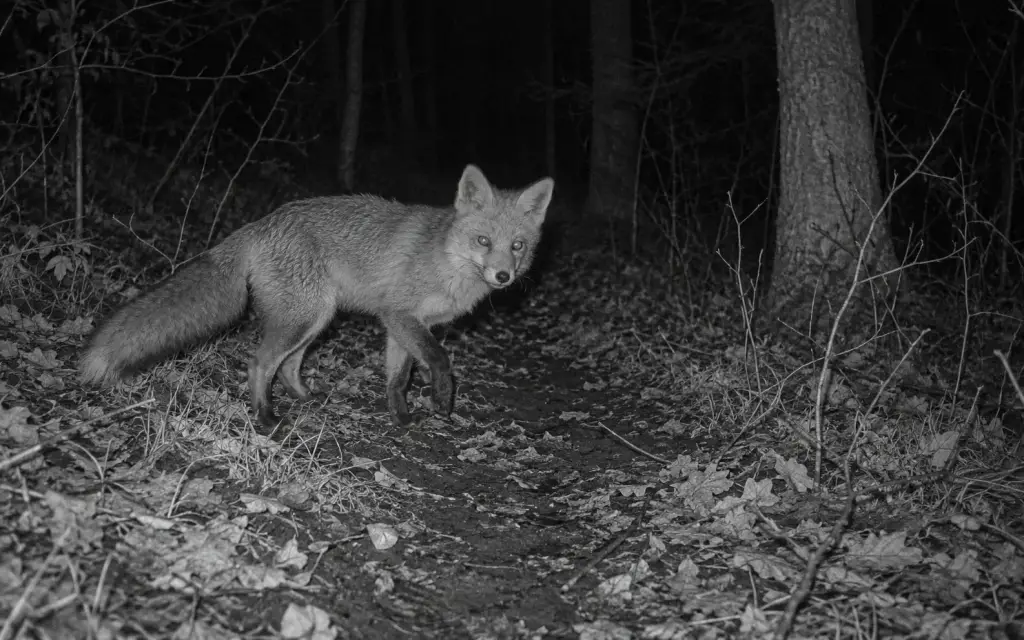
At night, trail cameras work with infrared LEDs, and the pictures are then in black and white. There are two common variants:
- 850 nm (low glow): The LEDs glow faintly red. The illumination is often a little brighter.
- 940 nm (no glow): The light is practically invisible to people. The camera is less noticeable at night.
Also look at the stated night-time range. Read more in our guide trail camera night vision and infrared.
5. Power supply: batteries, rechargeable or solar
The power supply decides how often you have to go to the camera.
- AA batteries: Simple and available everywhere. Good for cameras without a mobile connection that rarely trigger.
- Lithium battery: Rechargeable, no constant buying of batteries.
- Battery with solar panel: The panel recharges the battery. This makes particular sense for 4G cameras, because transfer uses energy.
Note: cold, shade and short winter days reduce the performance of the battery and solar panel. Lots of triggers and videos use more power than a few photos. Background information can be found in our guide trail camera batteries and solar power.
6. Weather protection: the IP rating
A trail camera hangs outside in rain, snow and frost. The IP rating shows how well sealed the housing is. The first digit stands for protection against dust, the second for protection against water.
- IP65: dust-tight and protected against water jets.
- IP66: dust-tight and protected against powerful water jets.
Also check the operating temperature if the camera will stay outdoors in winter.
7. App, SIM card and ongoing costs
With 4G trail cameras you need an app and a data allowance. Before buying, check whether a SIM card is included, whether the camera works with the common networks in your country and what costs arise after the trial data. Classic cameras without a mobile connection have no ongoing costs. How to find the right SIM card and data plan is covered in our FAQ.
8. Warranty, returns and service
A trail camera is exposed to a lot outdoors. A long warranty and reachable customer service are therefore important reasons to buy. With WildenoCam you get:
- a 3-year warranty on material and manufacturing defects
- a 30-day money-back guarantee with free returns
- dispatch within 24–48 hours, delivery in 3–5 working days
- free delivery to Ireland
- customer service Monday to Friday, 9 am to 6 pm
Details can be found on our delivery and cancellation and returns pages.
Which WildenoCam suits which need?
The following table compares our four trail cameras based on the manufacturer’s specifications. It is not a test but a factual overview.
| Model | Transfer | Video | Power | Special feature |
|---|---|---|---|---|
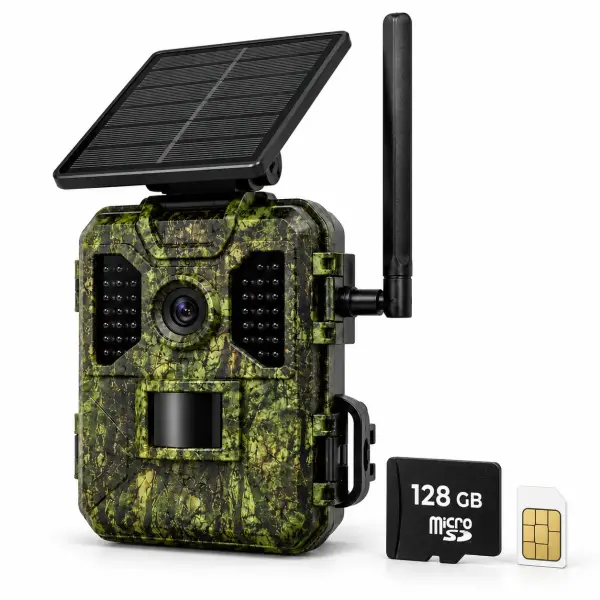
| 4G Trail Camera 4K with Solar Panel | 4G, app | 4K with sound | 7,800 mAh battery + 4 W solar panel | Live view, 940 nm no glow, IP66, SIM and 128 GB card included |
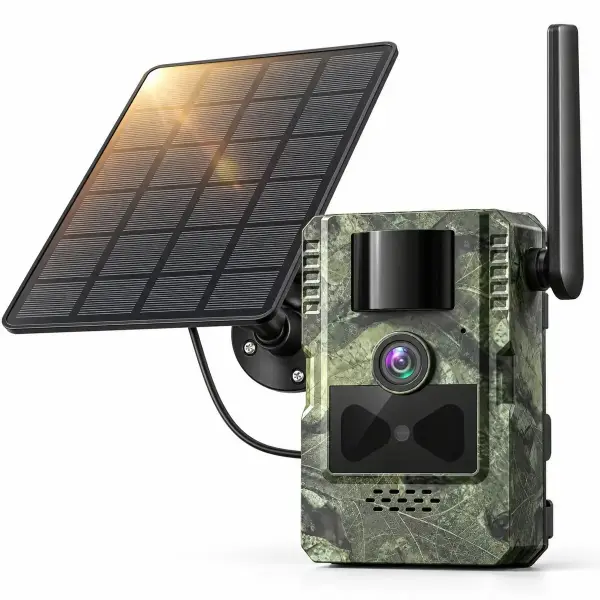
| 4G Solar Trail Camera 2.7K with Two-Way Audio | 4G, app | 2.7K with sound | 7,800 mAh battery + detachable 4 W solar panel | Listen and speak through the app, 120° detection, SIM included |
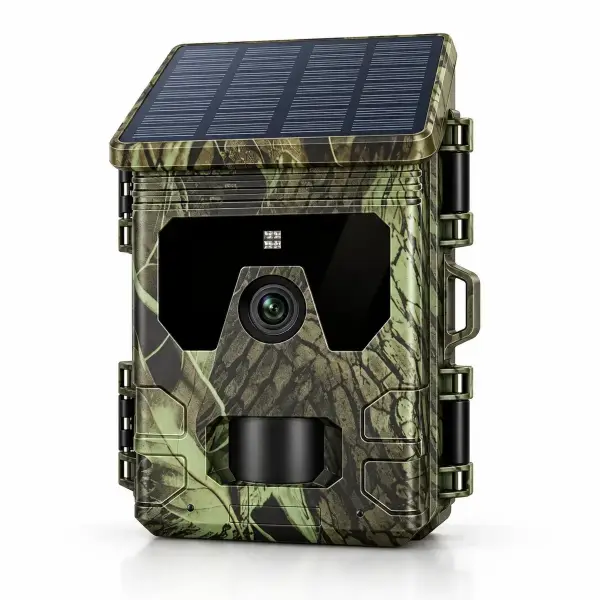
| Solar Trail Camera with Display | none (microSD) | Full HD 1080p | integrated solar panel + lithium battery | 2.0-inch display, 0.2 s trigger, no subscription, IP65 |
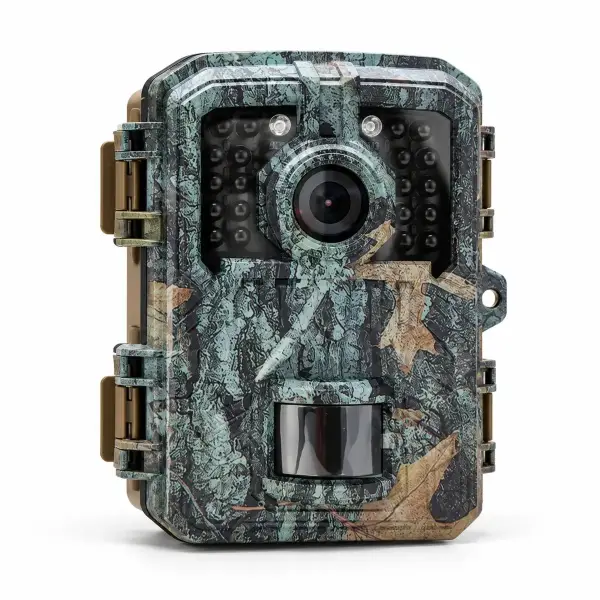
| Mini Trail Camera Full HD | none (microSD) | Full HD 1080p | 4 × AA, standby up to 6 months | small and light, 2.0-inch display, IP65 |
Pictures straight to your phone, even in 4K
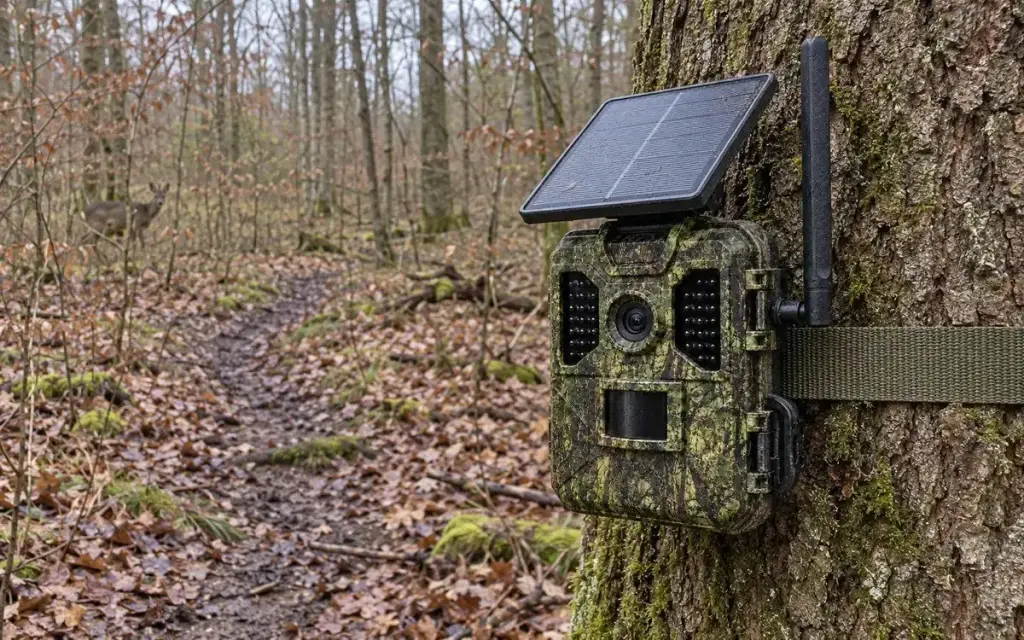
The 4G Trail Camera 4K with Solar Panel suits anyone who wants to keep an eye on a distant location: hunting ground, a holiday home or a property you rarely visit. You get a notification via the app as soon as something moves, and you can use live view. The PIR sensor triggers in approx. 0.2 seconds and detects movement up to 19 m. The camera works from −25 °C to +60 °C.
4G with two-way audio and a wide view
The 4G Solar Trail Camera 2.7K with Two-Way Audio also sends pictures to your phone via 4G. Through the app you can listen and speak. The 120° detection angle covers a wide area. A microSD card is not included.
No mobile signal and no subscription
The Solar Trail Camera with Display is the right choice if there is no signal at the location or you do not want any ongoing costs. It records to microSD cards up to 128 GB, and you view the pictures on the 2.0-inch colour screen. The integrated solar panel recharges the lithium battery. Photos are 20 MP native and can be saved at up to 50 MP interpolated.
Small, discreet and simple
The Mini Trail Camera Full HD is small, light and quick to hide. It runs on 4 AA batteries and records to microSD cards up to 32 GB. It makes a good entry-level camera, for example for watching wildlife in the garden.
After buying: three things not to forget
- Mind the legal side: Only film areas you are allowed to film. Public paths, neighbouring properties and people should not be in the picture. In woodland and on someone else’s land you need the permission of the landowner or the holder of the hunting rights. This is not legal advice. More in our guide Are trail cameras legal?
- Mount it properly: At a height of about 1–1.5 m, pointed at the game trail and not directly into the sun.
- Secure it against theft: A cable lock for trail cameras from our range makes life much harder for thieves.
Conclusion: how to find your trail camera
First decide between a cellular 4G camera and a classic camera with a memory card. Then choose according to location, power supply and night vision. If you want to monitor your location remotely and are looking for the highest resolution in our range, the 4G Trail Camera 4K with Solar Panel is the best fit. You can compare all models in our trail cameras overview.
Frequently asked questions
What should I look for when buying a trail camera?
The key criteria are the type of transfer (4G or memory card), trigger time, night vision, power supply, IP rating and any ongoing costs. First check whether there is mobile signal at the location.
Which is the best trail camera?
There is no single best trail camera. For a distant location with signal, a 4G camera makes sense. For places without signal, or if you want no ongoing costs, a classic camera with a display is the better choice.
Do I need a subscription for a trail camera?
Classic trail cameras without a mobile connection need neither a subscription nor a SIM card. 4G trail cameras need a SIM card and a data allowance so that they can send pictures to your smartphone.
850 nm or 940 nm: which is better?
940 nm infrared is practically invisible to people, so the camera is less noticeable at night. 850 nm infrared glows faintly red but often lights the scene a little more brightly. For discreet monitoring, 940 nm is the usual choice.
Is Full HD enough for a trail camera?
For watching wildlife in the garden, Full HD is enough in many cases. 2.7K and 4K show more detail but produce larger files and, on 4G cameras, use more data.
What warranty does WildenoCam offer?
You get a 3-year warranty on material and manufacturing defects and a 30-day money-back guarantee with free returns. Delivery to Ireland is free.