Guides · · 8 min read
Solar Powered Trail Camera or Batteries? Choosing the Right Power
AA batteries, lithium battery or solar panel: which power supply suits your trail camera, and how to make it last longer, even in winter.
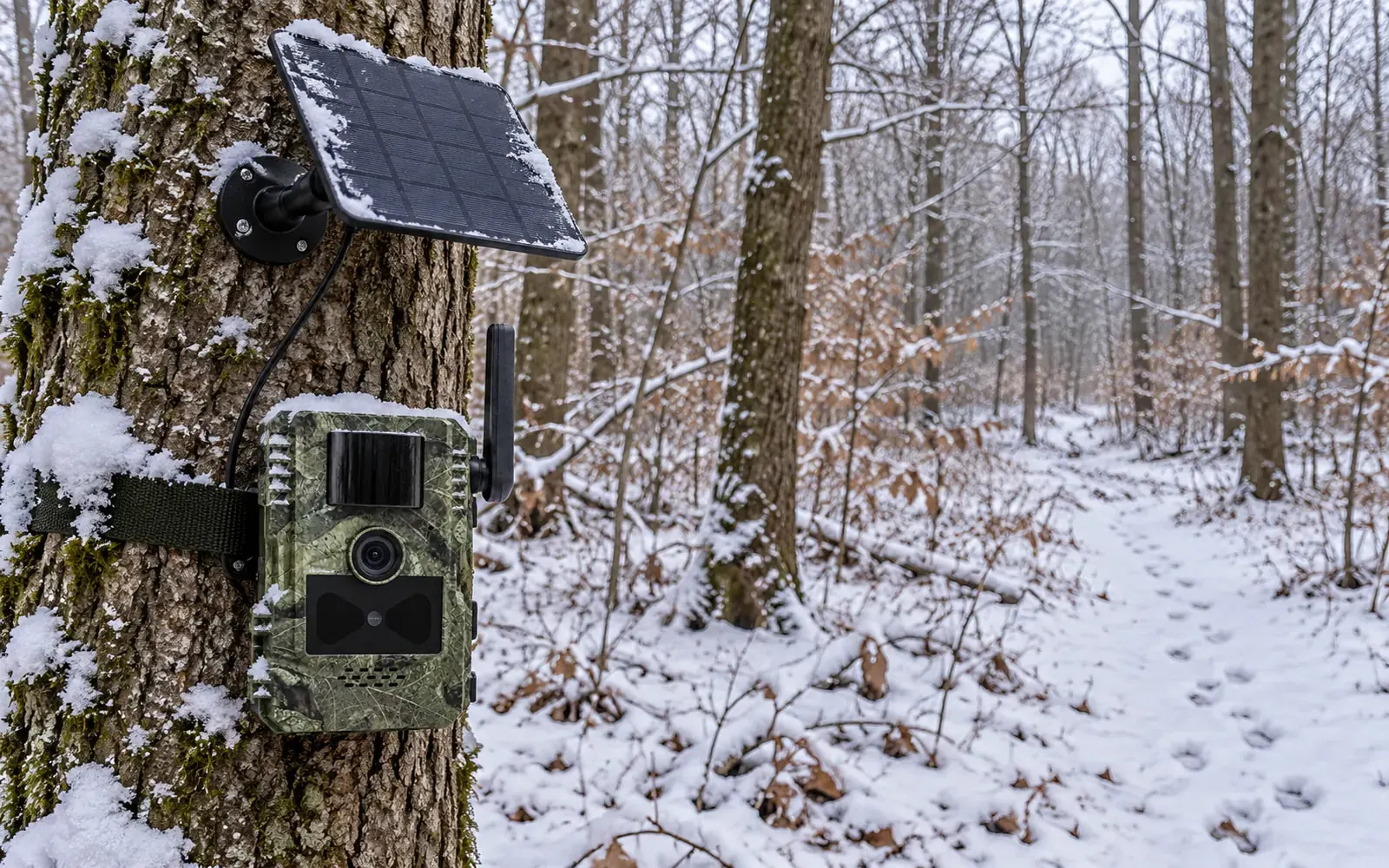
For a classic trail camera without data transfer, AA batteries often last many weeks to months. A 4G trail camera uses much more power and works best with a large lithium battery recharged by a solar panel. How long a trail camera keeps going depends mainly on how often it triggers, whether it takes photos or videos, how many recordings are made at night and how cold it is. Here is how a solar powered trail camera compares with battery power.
The three types of power supply at a glance
Trail cameras are powered in three ways:
- Disposable AA batteries: alkaline or lithium. This is the classic solution, especially for small cameras without 4G.
- Rechargeable batteries: either rechargeable AA batteries (NiMH) in the battery compartment or a built-in lithium battery.
- Solar: a solar panel recharges the built-in battery. The panel is either integrated into the housing or connected by cable.
| Power source | Advantages | Disadvantages | Suitable for |
|---|---|---|---|
| Alkaline batteries (AA) | Available everywhere, easy to change | Lose a lot of power in the cold, create waste | Cameras without 4G, few triggers, mild season |
| Lithium batteries (AA) | Good performance in frost, light weight | More expensive than alkaline, also disposable | Cameras without 4G in winter |
| NiMH rechargeables (AA) | Rechargeable | Lower voltage (1.2 V instead of 1.5 V), some cameras show “battery empty” sooner | Only if the camera is suitable for them |
| Built-in lithium battery | High capacity, no battery changes | Needs recharging, less performance in frost | 4G cameras, lots of triggers |
| Battery + solar panel | Recharges itself, less maintenance | Needs light, lower yield in winter | 4G cameras, remote locations |
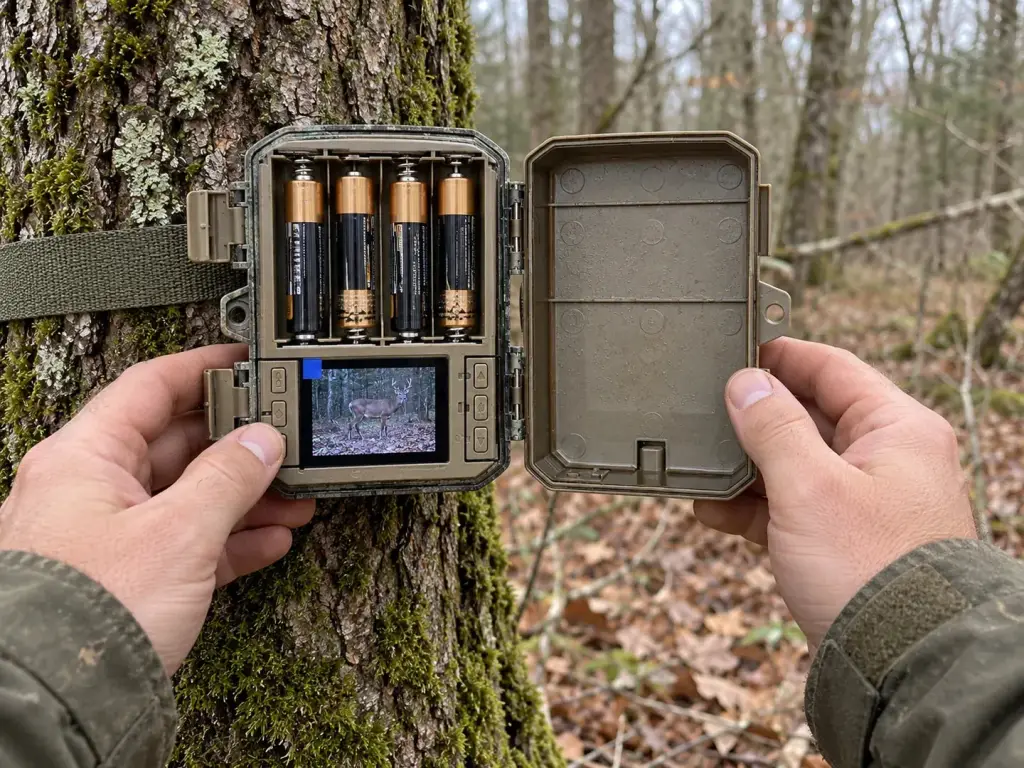
Trail camera with AA batteries
AA batteries are the simplest solution. You need no charger and can give the camera fresh batteries at any time. For cameras without a mobile connection this is often perfectly adequate, because they use very little power on standby.
Alkaline or lithium?
Alkaline batteries are cheap but lose noticeable power in the cold. In frost, a camera with alkaline batteries may report “empty” even though the batteries would still work at room temperature. Lithium AA batteries cope with the cold much better. If your camera stays outdoors over the winter, they are usually the better choice.
Rechargeable AA batteries
NiMH batteries deliver 1.2 volts instead of 1.5 volts. Some cameras read this as a weak battery and switch off sooner. Check in the manual whether your camera is suitable for rechargeables. If it is, low self-discharge batteries make sense, because the camera often hangs unattended for weeks.
Tips for running on batteries
- Always change all batteries at the same time; do not mix old and new.
- Do not combine different types or brands in the same compartment.
- Remove the batteries for longer storage so that they do not leak.
- Fit fresh batteries before winter rather than reusing half-empty ones.
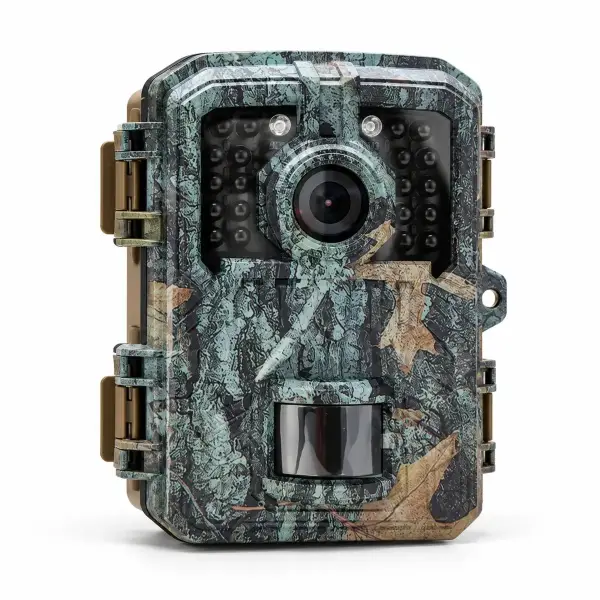
One example is our Mini Trail Camera Full HD: it runs on 4 AA batteries and reaches up to 6 months on standby. The actual runtime is shorter the more often the camera triggers. Batteries are not included.
Rechargeable trail camera
A rechargeable trail camera has a built-in lithium battery. Instead of changing batteries, you charge it, or a solar panel does the job. For 4G trail cameras this is almost essential: every transfer of photos or videos over the mobile network uses power, and live view on your smartphone even more. With AA batteries you would be changing them constantly.
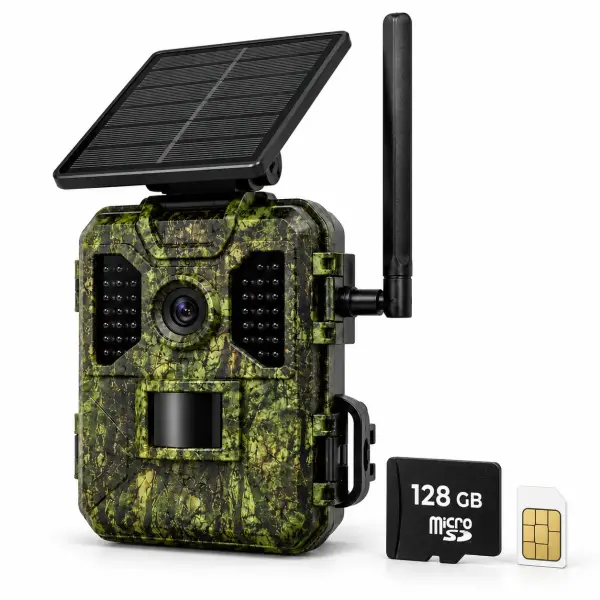
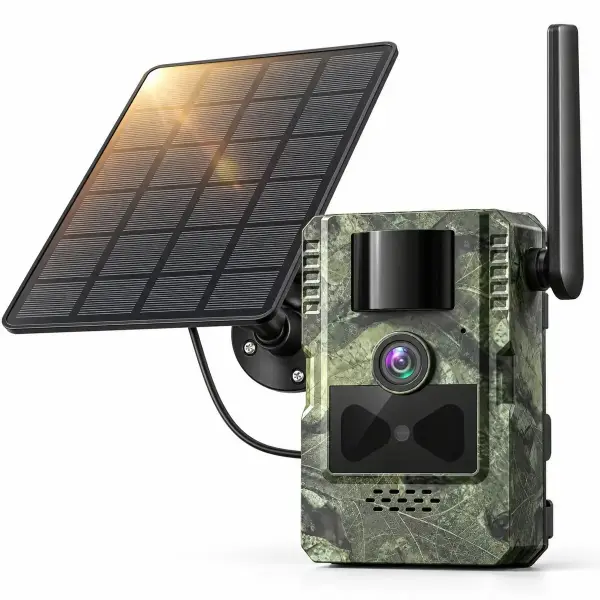
The 4G Trail Camera 4K with Solar Panel and the 4G Solar Trail Camera 2.7K with Two-Way Audio each have a 7,800 mAh battery and a 4 W solar panel. How transfer by SIM card works is explained in trail camera with SIM card.
Trail camera with solar panel
A solar panel does not make charging unnecessary in every case, but it considerably extends the time between two charges. In a bright location, the panel can fully or largely offset consumption over many weeks. That depends, however, on sun, season and use.
Integrated or separate solar panel?
With an integrated panel, the solar cell sits directly on the housing. That is compact and quick to mount. However, the camera and panel then have to face the same way. A separate panel with a cable can be mounted where the sun reaches, while the camera looks at the game trail from the shade.
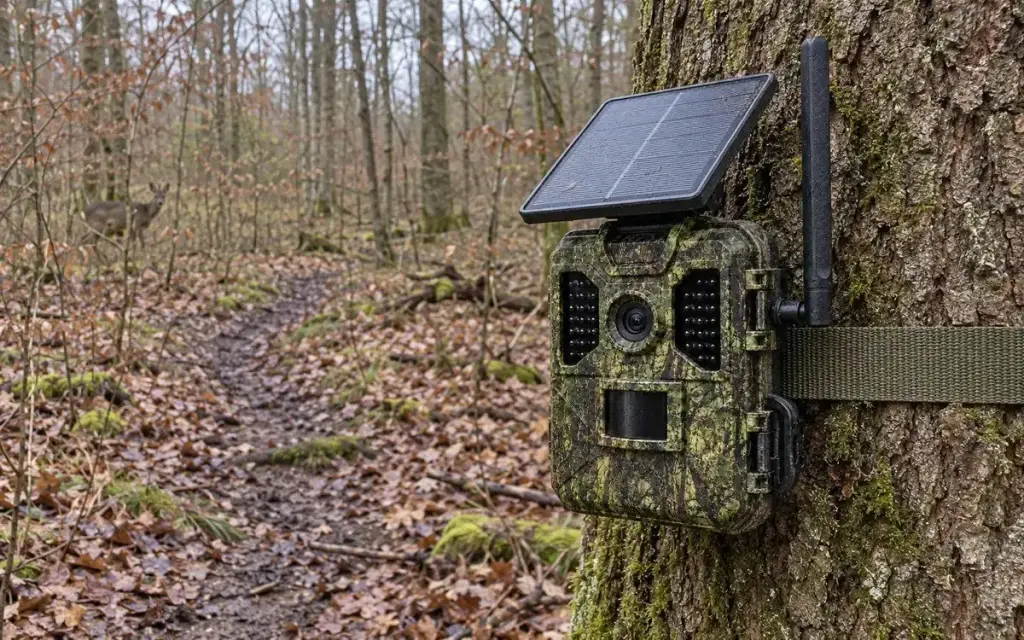
- The 4G Trail Camera 4K has an integrated 4 W solar panel.
- On the 4G Solar Trail Camera 2.7K, the 4 W panel is detachable and comes with a bracket and cable.
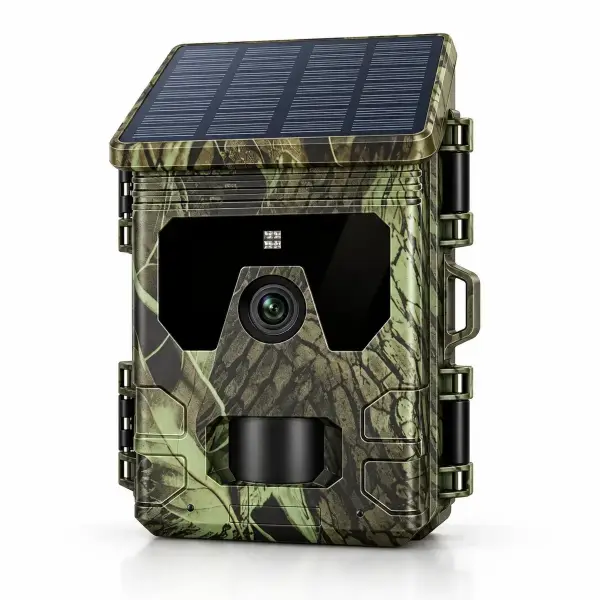
- The Solar Trail Camera with Display has the solar panel integrated into the lid and a rechargeable lithium battery. It works without 4G and without an app and records to a microSD card.
Positioning the solar panel correctly
- In Ireland, facing south gives the highest yield.
- Avoid shade on the panel from leaves, branches or buildings as far as possible.
- In winter the sun is low in the sky. A more steeply tilted panel then catches more light.
- Remove snow, leaves and dirt regularly.
- Make sure the camera itself does not look directly into the sun. Backlight leads to poor pictures and false triggers.
Trail camera in winter: cold and short days
Winter is the toughest time for any power supply. Three effects come together:
- Cold: Batteries deliver less energy in frost. This applies especially to alkaline batteries, but lithium batteries lose performance too.
- Little light: Short days, low sun, fog and snow on the panel reduce the solar yield considerably.
- Long nights: At night the camera switches on its infrared LEDs. Lots of night recordings cost more power. More on this in trail camera night vision and infrared.
To be completely honest: continuous operation on solar power alone cannot be guaranteed in all conditions. In dull winter weather, in shade and with lots of triggers, extra charging may be needed. The 4G Trail Camera 4K is designed for −25 °C to +60 °C. In severe frost the battery still discharges faster. So check the charge level in the app before longer cold spells.
How long does a trail camera battery last?
There is no reliable blanket figure. The runtime depends on several factors:
- Number of triggers: A camera on a busy game trail triggers far more often than one in a quiet garden.
- Photo or video: Videos use more power than photos, long videos more than short ones.
- Night recordings: The infrared illumination needs extra energy.
- 4G transfer: Every picture sent and every live view costs power. With a weak signal, the radio module has to work harder.
- Temperature: In the cold, usable capacity drops.
- False triggers: Moving branches, tall grass or sun reflections trigger unnecessary recordings.
How to make it last longer
- Photos instead of videos, if you mainly want to know which animals come by.
- Set a short video length, for example a few seconds instead of a minute.
- Lengthen the trigger interval, so that an animal that stays a while does not trigger dozens of recordings.
- Adjust the PIR sensitivity to the location and remove distracting branches from the field of view.
- Use live view when you need it rather than leaving it running.
- Choose a location with a good 4G signal if you use a 4G camera.
- Charge fully before winter, at home for example for cameras with a USB cable.
Our guide trail camera settings explained shows you how to make these settings step by step.
Looking after batteries properly
A few habits keep the power supply reliable for a long time:
- Check the charge level regularly: On 4G cameras you can see the battery level in the app. On cameras without 4G, it is worth glancing at the display every time you change the card.
- Do not wait until the battery is empty: Recharge before the battery is completely flat, especially before a longer cold spell.
- Check contacts and seals: Moisture in the battery compartment can cause corrosion. Close the housing carefully every time you open it.
- Do not let the camera overheat in summer: Blazing midday sun directly on the housing is good neither for the battery nor for picture quality.
- Make good use of breaks: If the camera is not needed for a few weeks, remove disposable batteries and store the camera somewhere dry.
When doing maintenance, also think of the memory card: a full card stops recordings even if the battery is still full. You will find tips in SD card for a trail camera.
Which power supply suits you?
- Occasional wildlife watching in the garden, without a smartphone: A classic camera with AA batteries such as the Mini Trail Camera Full HD is usually enough.
- No battery changes, but also no app or subscription: The Solar Trail Camera with Display recharges itself through the panel in the lid.
- Pictures straight to your phone, remote location: A 4G trail camera with a 7,800 mAh battery and a 4 W solar panel.
You can compare all models in our trail cameras overview. If you want pictures straight to your smartphone and to visit the camera as rarely as possible, the 4G Trail Camera 4K with Solar Panel is the right choice: 7,800 mAh battery, integrated 4 W solar panel, SIM card and 128 GB memory card included. On top of that you get a 30-day money-back guarantee and a 3-year warranty.
Frequently asked questions
How long does a trail camera battery last?
That depends on the number of triggers, on photos or videos, on night recordings, on 4G transfer and on the temperature. A 4G camera needs much more power than a camera that only records to a memory card.
Is a solar panel enough in winter?
A solar panel supports charging, but in winter the yield is lower. Dull days, shade, cold and lots of triggers can make extra charging necessary. Continuous operation on solar power alone is not guaranteed in all conditions.
Which batteries are best for a trail camera in frost?
Lithium AA batteries cope with the cold much better than alkaline batteries. Always change all batteries at the same time and do not mix types.
Can I use rechargeable AA batteries?
Only if your camera is suitable for them. NiMH batteries have 1.2 V instead of 1.5 V, and some cameras then report an empty battery sooner. Check the manual.
Which way should the solar panel face?
In Ireland, south if possible, without shade from leaves or branches. In winter a steeper tilt helps. The camera itself should not look directly into the sun.
Why does a 4G trail camera need a large battery?
Every transfer of photos and videos over the mobile network and every live view costs power. A large lithium battery with a solar panel means you have to recharge the camera less often.